
Heart Health Starts With Your Spine
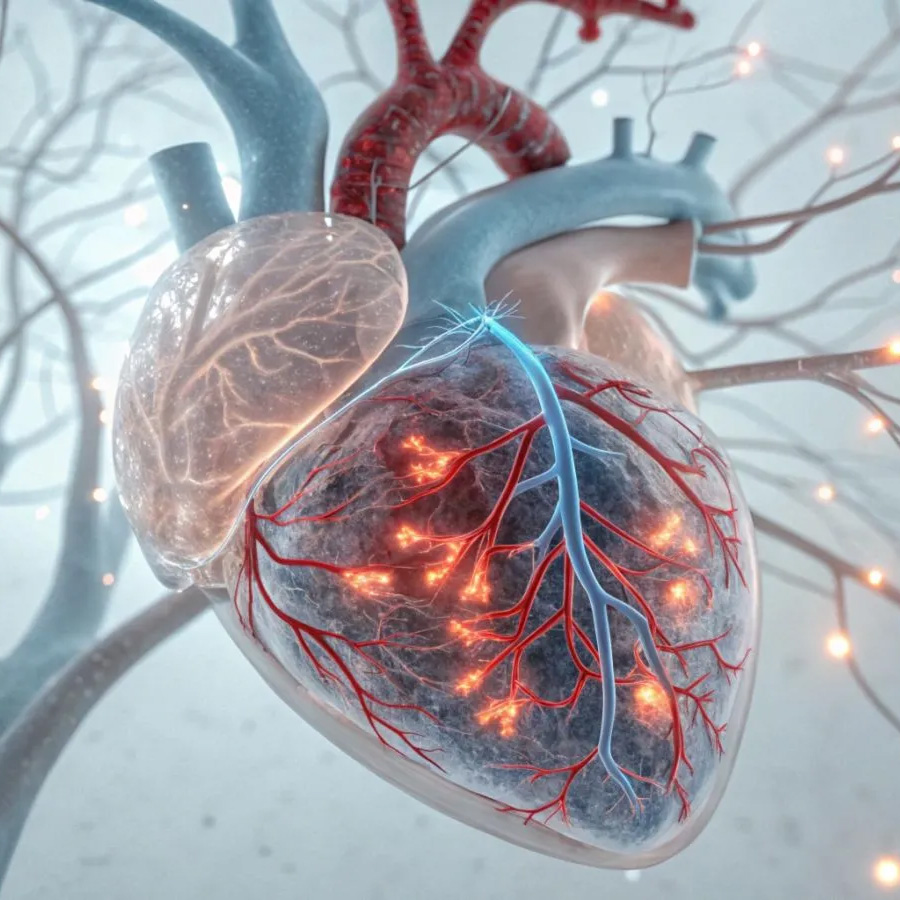
The Nervous System – Circulation Connection Most People Overlook
Most people are looking in the wrong place!
When people think about heart health, they usually focus on:
- Cholesterol Markers
- Blood Pressure Readings
- Cardiovascular Workouts
- Dietary Adjustments
Although many of these are important (especially nutrition and exercise), it is very common that they overlook something even more fundamental.
Your heart doesn’t work alone — it is regulated by your Nervous System. That system of energy travels through your spine — the communication highway between your brain and the rest of your body.
The Nervous System continuously adjusts heart function — including the heart rate, blood pressure, and blood vessel tone — based on incoming spinal and postural signals.
Your Heart Is an Electrical Organ Regulated by the Nervous System
Although the heart has its own intrinsic pacemaker (the sinoatrial node), its activity is constantly modulated by the autonomic nervous system (ANS) — the balance between:
- Sympathetic (“fight or flight”)
- Parasympathetic (“rest and recovery”)
Heart rate variability (HRV) is a scientifically validated measure of this autonomic balance and reflects how well your heart adapts to stress and recovery. Higher HRV is associated with better resilience and cardiovascular health.
The Spine Protects the Control Center
Your spine is not just structural support — it protects the spinal cord and the nerve roots that connect your brain to your organs.
Key points:
- Upper cervical (neck) nerves influence autonomic regulation via connections to the brainstem.
- Thoracic (mid-back) nerves are closely connected to heart and lung control pathways.
Research has shown that body position and spinal posture affect cardiac output, stroke volume, and autonomic nervous system activity. For example, deviations from a neutral trunk position reduce stroke volume and increase sympathetic activation, which can increase heart rate and decrease efficient cardiac performance.
How Your Posture Influences Circulation and Stress Signals
Posture isn’t just about aesthetics — it affects how your Autonomic Nervous System responds.
Studies demonstrate that:
Changes in posture (e.g., sitting vs. standing) significantly influence heart rate, blood pressure, and HRV, indicating shifts in autonomic balance.
Poor posture (rounded shoulders, forward head position) is linked with increased sympathetic nervous system dominance (stress response) and reduced parasympathetic activity.
Neutral posture supports more relaxed autonomic states conducive to better heart function.
What Research Shows About Chiropractic & Autonomic Regulation
Research into how spinal manipulative therapy (SMT) affects the autonomic nervous system has mixed results — not surprising given the complexity of neurophysiology — but several findings are noteworthy:
Heart Rate Variability and Chiropractic Care
A multi-clinic study found that chiropractic care was associated with increased HRV and reduced pain, suggesting improved autonomic regulation.
Case observations have reported sustained improvement in HRV in patients receiving continuous chiropractic care, indicating long-term changes in neurophysiological resilience.
Some research suggests that cervical adjustments may stimulate the parasympathetic system, which supports the “rest and recovery” branch of autonomic function.
Important balanced note: A systematic review concluded that overall evidence quality is low and more research is needed, but there are indications that spinal interventions can influence autonomic parameters like HRV.
Why This Matters for Heart Health
Putting it all together:
- Your heart is constantly modulated by nervous system signals
- The spine protects the communication pathways for those signals
- Posture and spinal dynamics influence autonomic balance and cardiovascular responses
Therefore, structural alignment and posture-related nervous system stress play a role in how effectively your heart functions — not as a replacement for medical care, but as part of a holistic cardiovascular support strategy.
5 Daily Habits to Support Heart & Circulation
Here are evidence-aligned habits you can recommend to your readers:
1. Postural Resets Throughout the Day
Regular postural checks help support neutral alignment, which research links to more balanced autonomic nervous system responses.
2. Active Breaks from Sitting
Switching positions and engaging muscles promotes cardiovascular return and reduces static spinal strain.
3. Nasal Breathing & Slow Exhales
Deep breathing supports parasympathetic activation — a key aspect of efficient heart regulation. Measurement of HRV reflects this improved autonomic balance.
4. Walk After Meals
Improves circulation and supports baroreflex and venous return — foundational elements of cardiovascular regulation.
5. Regular Spinal Assessments
Since spinal and postural stressors influence nervous system signaling, regular evaluation can support long-term autonomic and cardiovascular resilience.
Chiropractic Care: A Part of the Heart Health Conversation
Corrective Chiropractic Care emphasizes:
- Posture and structural balance
- Spinal motion and Nervous System communication
- Functional support rather than symptom suppression
Patients often report:
- Better stress tolerance
- More consistent nervous system responses
- Improved daily function and comfort
These outcomes reflect what HRV research suggests: that reducing nervous system interference can support a more adaptive and resilient autonomic state over time.
Heart Health Isn’t Just Cardio — It’s Communication
Strong heart health includes:
- Nutrition
- Exercise
- Sleep
- Stress management
- Efficient Nervous System function
Your spine plays an essential role in how the brain controls the heart.
Ready to Strengthen Your Foundation?
At The Chiropractic Source, we assess:
- Spinal alignment
- Postural balance
- Nervous system stress patterns
- Functional movement and circulation-supporting strategies
Schedule a comprehensive posture and nervous system evaluation to support your heart health goals this year at (973) 228-0500
The Chiropractic Source
388 Pompton Avenue
Cedar Grove, New Jersey 07009
Office: 973-228-0500
| Monday | 9 AM - 12:30 PM 2:30 PM - 6 PM |
| Tuesday | 2:30 PM - 6 PM |
| Wednesday | 9 AM - 12:30 PM 2:30 PM - 6 PM |
| Thursday | 9 AM - 12:30 PM 2:30 PM - 6 PM |
| Friday | Closed |
| Saturday | 8:30 AM - 10:30 AM |
| Sunday | Closed |